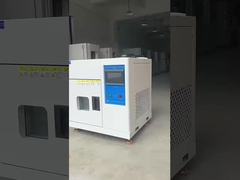
Salt Spray Test Chamber Corrosion Test

Salt Spray Test Chamber
January 09, 2026
Category Connection: Salt Spray Test Chamber
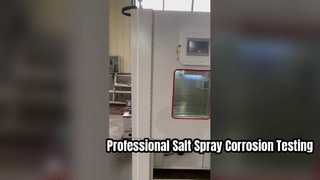
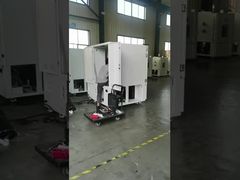
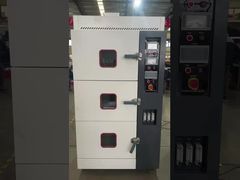
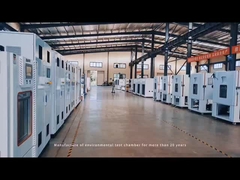
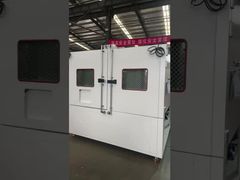
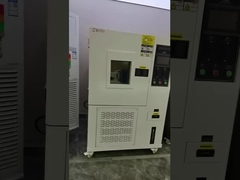
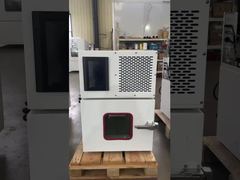
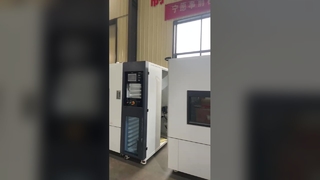
Brief: In this video, we provide an in-depth look at the B-SST-160 Salt Spray Test Chamber. You'll see how this high-quality stainless steel and PVC plastic plate chamber simulates corrosive salt fog environments to test the durability of components in industries like automotive, electronics, and aviation. Watch as we demonstrate its precision spray system, automatic controls, and robust construction, offering insights into its application for accelerated corrosion testing and compliance with international standards.
Related Product Features:
  • Constructed with imported PVC high-strength corrosion-resistant plastic board for durability and easy cleaning.
  • Features an automatic water filling system to prevent test interruptions due to low water levels.
  • Equipped with precision glass nozzles and a spray tower for uniform salt fog dispersion without crystallization blocking.
  • Uses U-shaped titanium alloy heating tubes for fast, efficient temperature control and uniform distribution.
  • Includes a 7-inch TFT LCD touch screen for easy programming and monitoring of test parameters.
  • Designed with a large salt water tank and quartz filter to avoid nozzle blockages and ensure continuous operation.
  • Supports multiple test standards including GB/T, ISO, ASTM, and DIN for versatile industry applications.
  • Offers reliable sealing with a water-sealed box cover to prevent salt spray leakage during tests.
FAQs:
  • What industries commonly use the B-SST-160 Salt Spray Test Chamber?
    It is widely used in defense, aviation, automotive, electronics, plastics, and related industries for testing components, coatings, and protective layers against salt spray corrosion.
  • How does the chamber ensure consistent salt spray dispersion?
    It uses precision glass nozzles and a cone-shaped disperser in the spray tower to guide and adjust fog quantity, ensuring even distribution and preventing crystallization blockages.
  • What are the temperature ranges for different test methods in this chamber?
    For saline tests, the laboratory temperature is 35±1°C and the saturated air barrel is 47±1°C; for corrosion tests, it's 50±1°C and 63±1°C, respectively.
  • What materials are used in the construction of the test chamber?
    The body and inner liner are made of imported PVC high-strength corrosion-resistant plastic, while the box cover is transparent PVC for easy observation, ensuring longevity and leak-proof performance.