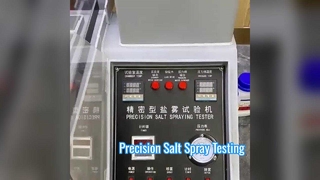
Salt Spray Test Chamber Corrosion Resistance Testing ASTM B117

Other Videos
January 15, 2026
Category Connection: Salt Spray Test Chamber
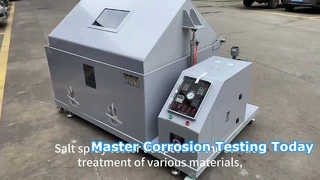
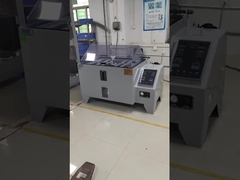
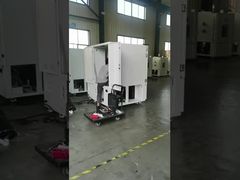
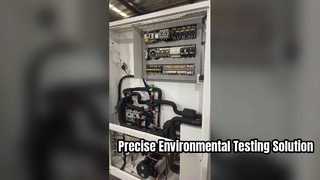
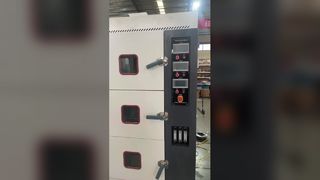
Brief: See the journey from feature description to real application in this concise overview. This video demonstrates the SUS304 Salt Spray Test Chamber performing ASTM B117 corrosion resistance tests. You'll see how it evaluates metal materials and coatings in harsh salt spray environments, with adjustable spray distances and precise control systems.
Related Product Features:
  • Industrial material corrosion resistance tester for metals and coating products.
  • Complies with ASTM B117 international standard for corrosion testing.
  • Features adjustable spray distance from 30cm to 50cm for precise testing.
  • Constructed from durable SUS304 corrosion resistant polymer material.
  • Advanced PLC/PC control system with safety protections against overload and leakage.
  • Adjustable test parameters including temperature (35℃~55℃) and humidity (95%RH).
  • Versatile test area ranging from 0.09m² to 2.25m² for various sample sizes.
  • Configurable spray nozzle size from 0.3mm to 0.8mm with pressure range 0.2Mpa~0.4Mpa.
FAQs:
  • What international testing standard does this salt spray chamber comply with?
    The chamber complies with ASTM B117, which is the most widely used international standard for corrosion testing of metals, alloys, and protective coatings.
  • What materials can be tested using this salt spray test chamber?
    It is suitable for testing a wide range of metals and alloys including stainless steel, aluminum, copper, brass, as well as coatings, paints and other protective materials for corrosion resistance evaluation.
  • What safety features are included in the chamber's design?
    The chamber includes comprehensive safety protections against overload, overheating, and leakage to ensure safe operation throughout the testing process, which can last from 48 to 1000 hours.
  • What industries commonly use this type of corrosion testing equipment?
    It is widely used in electronics, automotive, aerospace and other industries to test material performance and ensure reliability in harsh environmental conditions.